
Preparing for Open Enrollment 2027 – Part 1
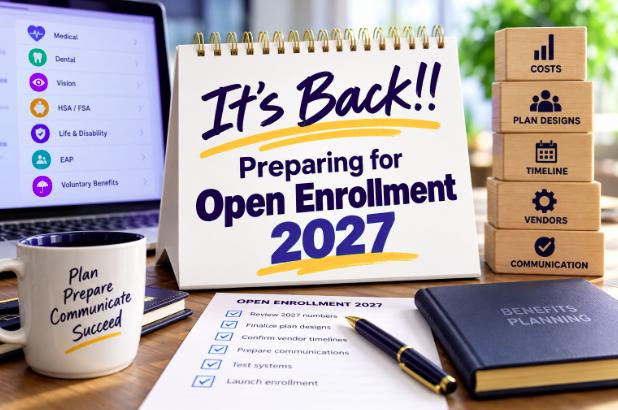
Open enrollment is usually the only time all year employees give their benefits a second thought. Even then, they don’t think much about it. The latest EBRI/Greenwald Consumer Engagement in Health Care Survey shows that about half of privately insured adults spend less than an hour choosing a health plan. Plenty take no action at all, rolling automatically into whatever they had last year.
That puts the real burden on the employer. The choices you make long before the portal opens determine what your workforce ends up with—whether they actively engage or sleepwalk through the window,
What Is Changing for 2027
Rising Costs
Health benefit costs are expected to climb 8.2% per employee in 2027—the sharpest single-year jump since 2003, according to Marsh. Left unmanaged, projected increases hit 11%. As employers absorb what they can and push remaining cost adjustments into deductibles or premium splits, expect more questions from your staff this fall.
HSA and HDHP Limits
The IRS published updated thresholds for 2027:
- HSA Maximum Contribution: $4,500 (self-only) | $9,000 (family)
- Minimum HDHP Deductible: $1,750 (self-only) | $3,500 (family)
- HDHP Out-of-Pocket Maximum: $8,700 (self-only) | $17,400 (family)
Health FSA Limits
The 2026 cap sits at $3,400. The official IRS figure for 2027 remains pending at publication, though standard inflation projections point toward $3,450 to $3,500. Format your enrollment draft with a variable tag so updating the final dollar amount takes seconds once released.
Dependent Care FSA Limits
Federal updates increased the household maximum to $ 7,500 (3,750 for married individuals filing separately) starting in 2026. If your plan held at the older limits last year, now is the time to decide if you will adopt the higher ceiling for 2027. Note: increasing this requires a formal plan amendment.
ACA Affordability Threshold
The ACA affordability percentage rises to 10.22% for 2027 (up from 9.96% in 2026). While the higher percentage offers Applicable Large Employers (ALEs) slightly more latitude on safe harbors, underlying medical inflation can erase that breathing room rapidly. Run your safe harbor calculations against your lowest-cost tier early.
Build the Calendar First
Start planning 90 to 120 days before your plan year start date. If you run a calendar-year plan starting January 1, you are already in the home stretch—use this breakdown to audit your progress:
- Lock Decision Deadlines: Set strict cutoff dates for plan designs, carrier selections, and premium contribution tiers. You can’t configure systems or print materials until these numbers stay still.
- Sync Vendor Schedules: Confirm file feed timelines, print dates, and open/close windows with every carrier, TPA, and platform vendor.
- Account for Labor Relations: For unionized workforces or school districts, benefit shifts or contribution adjustments often require collective bargaining consultation. Build bargaining calendars into your launch schedule—do not assume it can be done on the fly.
- Prepare First Payroll: Identify who is verifying the first deduction run in January and map out how mid-cycle corrections will be handled.
Review the Full Package
Medical plans get the spotlight because they represent the largest line item, but smaller benefit components carry significant administrative risk if neglected.
- Dental & Vision: Check utilization trends. Confirm provider networks still cover the geographical areas where your remote or local employees actually live.
- Life & Disability: Audit baseline salary data to ensure group life multiples accurately reflect current payroll. Review Evidence of Insurability (EOI) rules for employees requesting tier upgrades.
- Flexible Spending Accounts: Stagnant HSA or FSA participation rarely means employees don’t need tax savings—it usually points to poor communication during enrollment.
- EAPs: Review usage reports. Near-zero engagement almost always indicates your staff forgot the program exists.
- Voluntary Coverage: Accident, critical illness, hospital indemnity, and pet insurance offer value without direct employer premium costs. But overloaded options create decision fatigue. Retain popular offerings and trim dormant ones.
- Vendor Accountability: Review service level agreements (SLAs) before signing renewal contracts. Renewal time is your only real leverage point to resolve recurring admin or claim processing issues.
Set the Stage Before the Portal Opens
Because most employees spend less than an hour choosing their benefits, what you do before enrollment opens dictates your strategy’s success. Navigating higher rate increases and updated IRS caps requires clear decisions, tight calendar management, and a complete review of every plan design well before launch day.
Locking in your numbers and syncing your calendar lays the foundation, but execution carries it across the finish line. Stay tuned for Part 2 next week, where we will dive into end-to-end system testing, building an effective communication strategy, and executing an operational checklist for a seamless launch.