2027 Employee Benefit Expectations
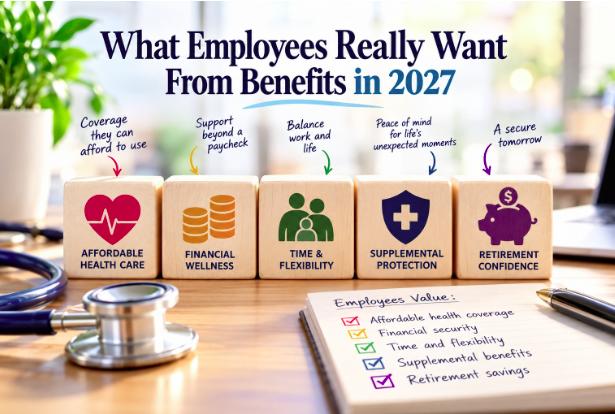
Heading into 2027, employers and employees face the same problem: rising health care costs. For the first time since 2022, controlling those expenses is employers’ top goal. Employees feel that same squeeze in their monthly paychecks and family budgets. Here is what recent research tells us about what your team actually values right now.
1. Health Coverage Remains #1 (But Affordability Is the Real Test)
Health insurance is still the non-negotiable core of any benefits package. Recent SHRM research shows that 88% of employers view health benefits as essential, while 72% of workers say health coverage is a primary reason they stay with a company.
However, employees’ core question has shifted. It’s no longer “Do we have health insurance?” It’s “Can I actually afford to use it?”
The numbers behind employee cost anxiety speak for themselves:
- 87% of workers report feeling stressed about health care costs.
- 64% of employees saw their out-of-pocket health costs rise over the past year.
- 50% of workers admit to skipping or delaying medical care specifically because of out-of-pocket expenses.
- 44% of employees say they couldn’t afford an unexpected medical bill over $1,000.
A high-deductible plan with low premiums might look budget-friendly on a spreadsheet, but it quickly becomes a financial barrier the moment an employee gets sick.
2. What Employees Look For in a Health Plan
When employees evaluate their coverage, they care most about five practical factors:
- Predictable costs: Reasonable copays and manageable out-of-pocket maximums beat surprise deductibles every time.
- Access to their doctors: A health plan is only as good as its network.
- Real prescription coverage: Specialty and maintenance drug costs are top of mind. For example, while nearly half of employers now cover GLP-1 medications for diabetes management, only about 15% cover them for weight loss—creating a clear gap in employee expectations vs. coverage.
- Accessible mental health care: Having behavioral health on paper doesn’t help if no in-network providers are taking new patients.
- Affordable family options: Dependent coverage premiums often decide whether a key employee stays or leaves.
3. Financial Wellness & Supplemental Security
Physical health and financial health are linked. PwC’s financial wellness research shows that 59% of employees feel stressed about their personal finances, 53% have under $5,000 in emergency savings, and 30% have less than $1,000.
That gap explains the surge in demand for non-medical benefits like dental, vision, disability, and voluntary supplemental plans (e.g., accident or critical illness). In fact, MetLife’s workforce data found that employees who utilize five or more non-medical benefits are nearly 40% more likely to feel secure and engaged at work.
4. Time, Flexibility, and Retirement
- Work-life balance: EBRI research identifies work-life balance as the single biggest factor in overall employee well-being (cited by 53% of workers).
- Paid time off: Paid parental leave continues to rise (now offered by ~46% of employers), proving that dedicated time off often carries as much weight as cash compensation for caregivers.
- Retirement confidence: Over 60% of workers rank a solid 401(k) or retirement plan as a key reason to stay with their employer—yet more than half worry they will need to tap into those savings early just to cover short-term living costs.
5. What Employees Ask Employers to Change
When employees are asked how their company could improve its benefits program, their answers are remarkably consistent:
- 48% want higher employer financial contributions toward care.
- 34% want more choice and flexibility to customize their plan.
- 33% want practical financial wellness resources and guidance.
What Employers Can Do for 2027
Most businesses can’t simply absorb every single premium hike. But you can make strategic moves that maximize the value of what you spend:
- Survey your team first: Run a quick, anonymous benefits survey 3–4 months before your renewal to find out what your team actually uses and values.
- Protect cost predictability: If you shift costs, evaluate how higher deductibles affect employees who use care versus healthy employees.
- Leverage low-cost supplemental perks: EAPs, voluntary benefits, and lifestyle spending accounts address major pain points without bloating your core premium line item.
- Communicate total rewards: Employees consistently underestimate how much their employer contributes to their overall health and retirement benefits. Clear, simple annual statements build trust and appreciation.
The Bottom Line
Before finalizing your 2027 plan design, test every change against one simple question: Will our employees understand this coverage, and will they be able to afford to use it when they need it?
Resources
- MetLife: Workforce & Benefits Trends Study / Employer Priorities Data
- EBRI & Greenwald Research: Workplace Wellness Survey
- SHRM (Society for Human Resource Management): Annual Employee Benefits Survey
- KFF (Kaiser Family Foundation): Health Tracking & Employer Health Benefits Poll
- Aflac: Aflac WorkForces Report
- PwC: Employee Financial Wellness Survey