Make Candidates Feel Seen, Not Screened
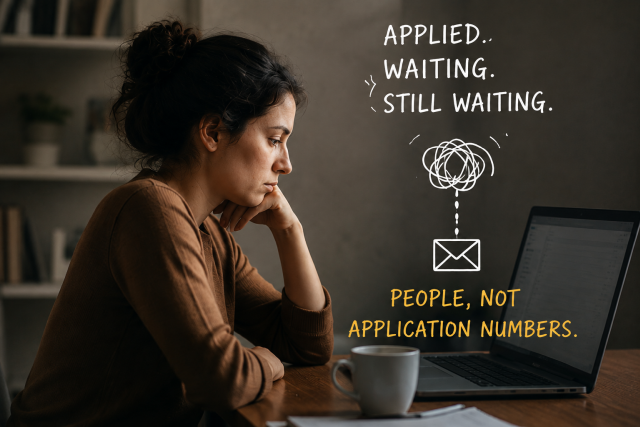
If you or anyone you know is job hunting right now, you already know the process feels broken. Applications disappear into a void. The only response, if there is one, is a form rejection that reads like an auto-reply — even for jobs you were clearly qualified for. No explanation. No acknowledgment.
Plenty of services promise to get you past the bots, get your application noticed, and land you the job with some “secret formula.” But when did we lose the human part of this process? What about the cover letter or resume that stood out for some reason, that made someone curious enough to trust their gut and offer an interview? How do we add that back in? How do we help applicants feel seen again?
I get it. Electronic application systems make things more efficient for both applicants and hiring teams. But applicants feel locked out of consideration, while employers believe they cannot find qualified candidates for their open roles. Multiple variables are driving today’s hiring trends. For today, my focus is on the loss of the human touch.
- Efficiency and empathy get treated like opposites in hiring. They do not have to be. You can move fast and still make someone feel like a person, not an application number. It takes intention, not extra headcount. Once you have built a fair, efficient hiring process, how do you keep a human being present in it? It comes down to a handful of small habits, done consistently.
- Acknowledge people fast, even if the answer is “not yet.” Silence is the biggest source of candidate frustration, and it’s the easiest thing to fix. An automated confirmation sent within minutes of applying costs nothing and tells someone their effort landed somewhere real. Just make it sound like a person wrote it. “Thanks for applying. We’re reviewing applications through [date] and will follow up either way” beats “Your application has been received.” That upgrade takes about thirty seconds. It’s still frustrating to wait, but at least you know what to expect—especially if you are upfront about only candidates moving to the next stage being contacted.
- Set a timeline, and then honor it. Candidates do not expect an instant decision. They expect to know when they will hear something, and then to actually hear it. Tell someone two weeks and go quiet for six, and you have not just annoyed one applicant — you have taught your whole candidate pool what kind of employer you are. Set a realistic timeline before you post the position, build in a buffer, and stick to it. A little underpromising goes a long way.
- Let rejection sound like someone actually read the application. You do not owe every candidate a personalized explanation for why they did not get the job. You do owe them more than “we have decided to move forward with other candidates,” sent at 11 p.m. from a no-reply address. One sentence referencing something specific about their background or the strength of the field makes a real difference — and it keeps the door open. Plenty of strong hires come from someone who was respectfully rejected eighteen months earlier and then applied again. This may not be feasible at the initial screening stage, but it should be standard for anyone who makes it past the first cut.
- Let AI handle logistics, not the human moments. Automation is fine for scheduling, initial screening, and status updates. It’s not a replacement for the offer call, the rejection after a final round, or a direct answer to a candidate’s question. If someone invested real time getting to your final round, they’ve earned a real conversation at the end of it — win or lose.
Bottom line
None of this slows your process down. It just requires deciding, on purpose, that candidates will remember how the process felt — and making sure it’s a good memory, whether they get the job or not. The employers who do this well aren’t hiring less efficiently. They’re just hiring as it matters. Job markets shift. Right now, the perception is it favors employers. Make sure your process is built to keep you on the winning side when that shifts back toward candidates.
Want a candidate experience audit before your next hiring cycle? That’s exactly the kind of gap CKW Advantage helps clients close.